

Freezing Temps Hit Buckhannon on Oct. 18: How to Protect Your Pipes and Find Your Water Shutoff Valve
Winter sent an early notice over the weekend. The National Weather Service office in Charleston put Upshur County under a freeze warning from 1 a.m. to 9 a.m. on Sunday, October 18, 2026, with temperatures forecast to drop as low as 27 to 29 degrees. The warning specifically mentioned that the cold could “possibly damage unprotected outdoor plumbing.”
One frosty morning in October usually isn’t what bursts pipes inside a house. The real trouble comes later, on the nights that drop into the teens. But right now, while it’s still mild during the day, is the easiest time to get your home ready. Here’s what to do this week, how to find and test your main water shutoff, and what to do if a pipe ever does let go.
Why Pipes Burst (and Why It’s Often Worse Than It Looks)
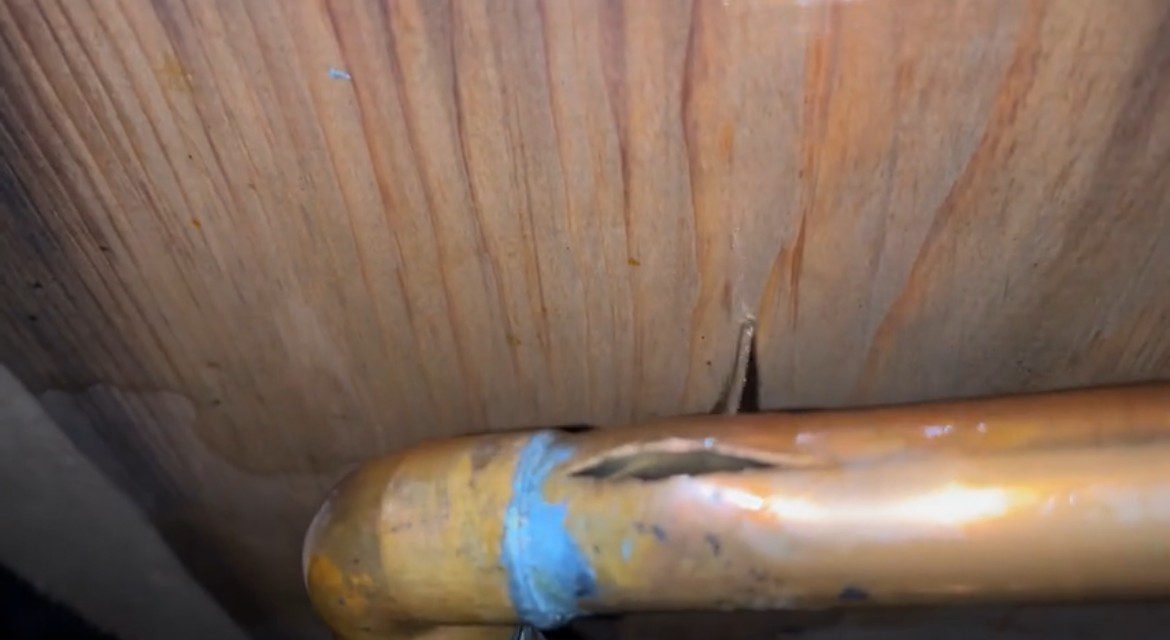
Water expands as it freezes, and that puts enormous pressure on whatever is holding it, whether the pipe is copper or plastic, according to the American Red Cross. Research from the University of Illinois, summarized by the International Code Council, found that the break is usually caused by water pressure building up behind an ice blockage, not just ice pushing on the pipe wall.
That same research found that uninsulated pipes in unheated spaces started to freeze when it dropped to about 20 degrees outside. Pipes exposed to drafts, like ones near a crack in an outside wall, can freeze even when it’s warmer than that.
The pipes most likely to freeze, per the Red Cross:
- Outdoor hose spigots, sprinkler lines, and pool supply lines
- Supply lines in unheated basements, crawlspaces, attics, and garages
- Lines inside kitchen and bathroom cabinets on outside walls
- Pipes that run along exterior walls with little or no insulation
That describes a lot of homes around Buckhannon, French Creek, and Weston: older farmhouses, homes on crawlspaces, mobile homes, camps, and rentals that sit empty for stretches of the winter.
Your Fall Checklist: Do These Before the Hard Freeze
Most of this takes an afternoon and costs very little. These steps come from the American Red Cross and the Insurance Institute for Business & Home Safety.
Outside:
- Disconnect, drain, and put away garden hoses.
- If your outdoor spigots have a shutoff valve inside the house, close it. Then open the outdoor spigot so any water left in the line can drain and has room to expand.
- Drain sprinkler and pool supply lines following the manufacturer’s or installer’s directions.
Inside:
- Insulate exposed pipes in the crawlspace, basement, garage, and attic with foam pipe sleeves. UL-listed heat tape or heat cable is another option for problem spots.
- Seal drafts and gaps near where pipes run, especially around the foundation and crawlspace vents.
- Keep the garage door closed if water lines run through the garage.
On the coldest nights:
- Open the cabinet doors under kitchen and bathroom sinks so warm air reaches the pipes.
- Let cold water drip from faucets served by exposed pipes. Even a trickle helps.
- Keep the thermostat at the same temperature day and night. Your heating bill may go up a bit, but it’s far cheaper than a burst pipe.
If you’ll be away, or you own a camp or rental:
- Leave the heat on, set no lower than 55 degrees.
- IBHS suggests that if you’ll be gone more than a week during cold weather, consider slowly closing the main water valve and draining the lines.
- Ask someone to check on the property during cold snaps. A break at an empty house can run for days before anyone notices.
How to Find and Test Your Main Water Shutoff Valve
If a pipe bursts, the single most important thing you can do is shut off the water fast. Every minute it runs, water spreads farther into walls, floors, and insulation. Go find your valve now, while nothing is leaking.
Where to look:
- Basement: Usually within a few feet of where the water line comes through the foundation wall or floor, often on the wall facing the street.
- Crawlspace homes: It may be in the crawlspace itself, or near the water heater or under the kitchen sink. If yours is down in the crawlspace, think about having a second shutoff installed somewhere you can reach quickly.
- Homes on city water: Check near the water meter, or follow the cold water line back from the water heater.
- Homes on a well: The main valve is usually near the pressure tank.
These location tips come from WSSC Water’s shutoff guide and The Spruce.
How to close it:
- Round wheel handle (gate valve): Turn it clockwise until it’s snug. It may take a few full turns.
- Lever handle (ball valve): Turn it a quarter turn so the handle sits crosswise to the pipe.
Test it: Close the valve, then open a faucet on the top floor. If the water stops, you found the right one. Open the valve back up slowly. If the valve won’t budge, don’t force it, because an old valve can break. Have a licensed plumber repair or replace it before winter. (Source: American Water.)
Once you find it, hang a tag on it and show everyone in the house where it is.
If a Pipe Freezes
If you turn on a faucet and only a trickle comes out, suspect a frozen pipe. The Red Cross recommends:
- Keep the faucet open so water can flow as the ice melts.
- Warm the frozen section with an electric heating pad, a hair dryer, a space heater kept well away from anything flammable, or towels soaked in hot water.
- Never use a blowtorch, kerosene or propane heater, or any open flame.
- Check your other faucets. If one pipe froze, others may have too.
- If you can’t find the frozen spot, can’t reach it, or can’t thaw it, call a licensed plumber.
If a Pipe Bursts
- Shut off the main water valve.
- Stay out of standing water if it could be near outlets, cords, or your electrical panel. Only shut off power to wet areas if you can reach the panel without standing in water.
- Open faucets to drain the lines and relieve pressure.
- Move belongings out of the wet area.
- Take photos and video of everything before cleanup starts, and save receipts.
- Call your insurance company. Coverage for burst pipes varies from policy to policy, and some policies treat homes that were left unheated or vacant differently. Ask your adjuster what your policy covers before you assume either way.
- Call us for cleanup and drying.
Water from a broken line doesn’t stay where you can see it. It runs along framing, soaks into insulation, and spreads under flooring. If it isn’t dried properly, mold can follow. That’s why checking moisture in the surrounding walls and floors matters as much as cleaning up the puddle.
How Red Ridge Helps After a Burst Pipe
We’re a local contractor based in Buckhannon, IICRC certified and WV licensed (License #WV064509), and we answer 24/7. When a pipe breaks, we:
- Make temporary fixes to stop the damage, so a licensed plumber can then make the permanent pipe repair
- Extract standing water from floors, basements, and crawlspaces
- Remove wet drywall, insulation, and flooring that can’t be saved
- Dry the structure and track moisture readings until it’s actually dry
- Rebuild drywall, ceilings, flooring, cabinets, and paint, so you deal with one contractor from cleanup to finish
We work with any and all insurance companies and provide photos, moisture readings, and a written scope of work. We can’t tell you what your policy will pay, so ask your adjuster. You can learn more on our frozen and burst pipe repair page, our water damage restoration page, and our insurance claim repairs page. If you’re worried an old leak left moisture behind, see our mold remediation page or schedule a free inspection.
Get Ready Now, Not at 2 a.m.
The October 18 freeze was a warm-up. Take an hour this week to drain your hoses, insulate exposed pipes, and find your shutoff valve. If a pipe does break this winter, shut off the water and call us.
Water coming through the ceiling? Call Red Ridge any time, day or night, at (304) 439-6619, or reach us on our contact page. For other emergencies, see our 24/7 emergency response page.
Weather details are from the National Weather Service in Charleston, WV (weather.gov/rlx). Insurance coverage varies by policy. Ask your adjuster about your specific coverage. Red Ridge Contracting cannot guarantee any insurance outcome.
